Updates
Explore our AI insights, technical articles, and latest coverage
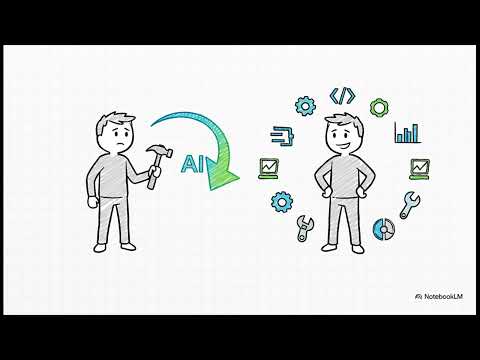
OpenAI 2025 Enterprise AI Status Report: How AI is Reshaping Modern Business
This video explores OpenAI's "2025 Enterprise AI Status Report," based on data from over 1 million business customers, revealing how AI is reshaping modern enterprises. Key findings include: 320x growth in enterprise API inference tokens, 40-60 minutes daily time savings for ChatGPT Enterprise users, 75% of employees now able to perform previously impossible tasks, 19x year-to-date growth in Custom GPTs and Projects weekly users, and over 6x median industry growth with tech leading at 11x. We also examine the widening gap between AI adopters and how leading enterprises achieve significant business outcomes through deep system integration, workflow standardization, and deliberate change management.
AI Researcher Evolution: How TTD-DR Mimics the Human "Draft, Revise, Diffuse" Process to Generate Top Research Reports!
Test-Time Diffusion Deep Researcher (TTD-DR) is a novel deep research (DR) agent framework proposed by teams from Google Cloud AI Research and Google Cloud.
A Comprehensive Exploration of Agent AI: The Future Outlook of Multimodal Interaction
Agent AI is defined as an interactive system capable of perceiving visual stimuli, language input, and other environment-based data, while generating meaningful embodied actions. Multimodal Agent AI (MAA) represents a series of systems that generate effective actions in given environments based on understanding of multimodal sensory input.

AIOS: LLM Agent Operating System - Solving LLM Agent Deployment Challenges!
Have you ever struggled with resource management, scheduling, and efficiency issues when deploying Large Language Model (LLM) agents? This video provides an in-depth introduction to AIOS (LLM-based AI Agent Operating System), an innovative architecture designed to optimize LLM agent execution efficiency, resource utilization, and security!

Revealed! Why Your LLM Inference Results Are Always Inconsistent? Deep Analysis of Non-determinism in LLM Inference!
Have you ever wondered why ChatGPT gives different answers even when you ask the same question multiple times? This is not just randomness from "sampling" - even with temperature set to 0, theoretically deterministic LLM APIs are still non-deterministic in practice! Many believe this is due to the "concurrency + floating-point" hypothesis caused by non-associativity of floating-point operations and parallel execution, but this is not the full picture. In this video, we will dive deep into the real causes of non-determinism in Large Language Model (LLM) inference and share how to solve this problem to achieve reproducible results!

Why Does AI Hallucinate? Large Language Models (LLMs) Are Known for Generating Plausible but Incorrect Statements
Large Language Models (LLMs) are known for generating statements that appear plausible but are incorrect, a phenomenon called "hallucination". Hallucinations severely damage the usefulness and credibility of models, persisting even in the most advanced systems. They are fundamentally different from human perceptual experiences. For example, when asked about Adam Tauman Kalai's birthday, a leading open-source language model gave three incorrect dates: "03-07", "15-06", and "01-01", even when prompted to only answer if certain. This video will explore the statistical causes of LLM hallucinations and their persistence in the training process, discussing potential solutions to develop more trustworthy AI systems. Research shows that hallucinations are not mysterious - they simply stem from errors in binary classification.

The GenAI Gap: Why 95% of Companies Get Zero Return on AI Investment?
Today we will dive deep into the groundbreaking report released by the MIT NANDA Project in July 2025: "The State of Enterprise AI 2025: The GenAI Gap". This report reveals a shocking reality about enterprise adoption of Generative AI (GenAI): despite investing hundreds of billions of dollars, the vast majority of GenAI projects have failed to deliver tangible returns, creating a massive "GenAI Gap"!