What is CRM? 2025 Complete Customer Relationship Management Guide for SMEs
In the digital age, Customer Relationship Management (CRM) has become a critical factor for business success. For small and medium-sized enterprises, choosing the right CRM system not only improves operational efficiency but also builds long-term customer loyalty.
What is CRM? Basic Concepts Explained
CRM (Customer Relationship Management) is a system and strategy that helps businesses manage interactions with customers. Modern CRM systems integrate sales, marketing, and customer service functions, enabling businesses to:
- Centralize customer data: Store all customer contact information and interaction records in one place
- Track sales processes: Complete pipeline management from leads to closed deals
- Automate marketing: Set up automated emails, reminders, and follow-up tasks
- Analyze customer behavior: Optimize sales strategies through data insights
CRM vs Traditional Customer Management
Many SMEs still use Excel or paper-based methods to manage customer data, which has obvious drawbacks:
| Traditional Method | CRM System |
|---|---|
| Scattered data, hard to integrate | Centralized database |
| Cannot track interaction history | Complete interaction records |
| Relies on personal memory | Automatic reminders and scheduling |
| Difficult to analyze trends | Real-time data reports |
Why Do SMEs Need CRM?
According to research, businesses that implement CRM see an average 29% increase in sales and 34% improvement in sales productivity. For resource-limited SMEs, the benefits are even more significant:
Benefit 1: Improved Sales Development Efficiency
Sales personnel spend significant time on administrative work. CRM automation features can:
- Automatically log calls and meeting content
- Set follow-up reminders to avoid missed opportunities
- Quickly generate quotes and contracts
Benefit 2: Enhanced Customer Experience
With complete customer profiles, any team member can provide personalized service:
- Access customer purchase history
- Record customer preferences and special requirements
- Proactively suggest relevant products
Benefit 3: Data-Driven Decision Making
CRM provides real-time reports and analytics, helping managers:
- Track sales goal achievement
- Identify high-value customer segments
- Predict sales trends
How to Choose the Right CRM System?
With many CRM systems on the market, SMEs should consider the following factors:
Factor 1: Feature-Need Match
Different industries and business sizes have different requirements:
- B2B Businesses: Need complete sales pipeline management
- B2C Businesses: Need marketing automation and customer segmentation
- Service Industry: Need appointment management and customer service tracking
Factor 2: User-Friendliness
Even the most powerful system is worthless if employees won't use it:
- Is the interface intuitive and easy to understand?
- Does it support mobile devices?
- Is the learning curve reasonable?
Factor 3: Integration Capabilities
CRM should integrate with existing tools:
- Email systems
- Accounting/ERP systems
- Messaging apps (LINE, WhatsApp)
Factor 4: Cost-Effectiveness
Evaluate total cost of ownership, including:
- Subscription fees
- Implementation and customization costs
- Training expenses
- Maintenance and upgrade fees
CRM Implementation Steps
Step 1: Requirements Assessment (1-2 weeks)
- Interview sales, marketing, and customer service teams
- Document existing processes and pain points
- List essential features needed
Step 2: System Evaluation (2-3 weeks)
- Attend vendor demo presentations
- Request free trials
- Compare features, pricing, and service
Step 3: Data Migration (1-2 weeks)
- Clean existing customer data
- Establish data format standards
- Import historical data
Step 4: Training (1-2 weeks)
- Advanced training for administrators
- Basic training for general users
- Create user manuals
Step 5: Go-Live and Optimization (Ongoing)
- Establish usage guidelines
- Regular review of usage patterns
- Continuous adjustments and optimization
CRM Recommendations for SMEs
DanLee CRM - Designed for Local Businesses
DanLee CRM is a customer relationship management system developed by ACTGSYS specifically for small and medium-sized enterprises. Key features include:
- Localized Design: Supports local languages and business practices
- LINE Integration: Chat with customers directly within the system
- AI Smart Assistant: Automatically analyzes customer behavior and recommends follow-up timing
- Flexible Pricing: Per-user billing, suitable for businesses of all sizes
Frequently Asked Questions
Q: Do small companies need CRM?
A: Yes! In fact, the earlier you implement CRM, the better you can establish good customer data management habits. Modern CRM offers many plans suitable for small teams.
Q: Is CRM implementation complicated?
A: It depends on the system. Choosing a CRM designed for SMEs (like DanLee) typically allows you to go live within 1-2 weeks.
Q: What's the difference between CRM and ERP?
A: CRM focuses on customer relationship management, while ERP covers overall enterprise resource planning. Many businesses use both and integrate them together.
Conclusion
CRM is not just software—it's a customer-centric business philosophy. For SMEs looking to stand out in a competitive market, implementing CRM is a necessary investment.
Want to learn more about CRM solutions for your business? Contact ACTGSYS consultants for a free consultation.
Related Articles
What is ERP? Complete Guide to Inventory Management Systems for SMEs
A comprehensive guide to ERP enterprise resource planning systems: from basic inventory management functions to implementation best practices. Learn how to select the right ERP system for your business and optimize inventory and order management.
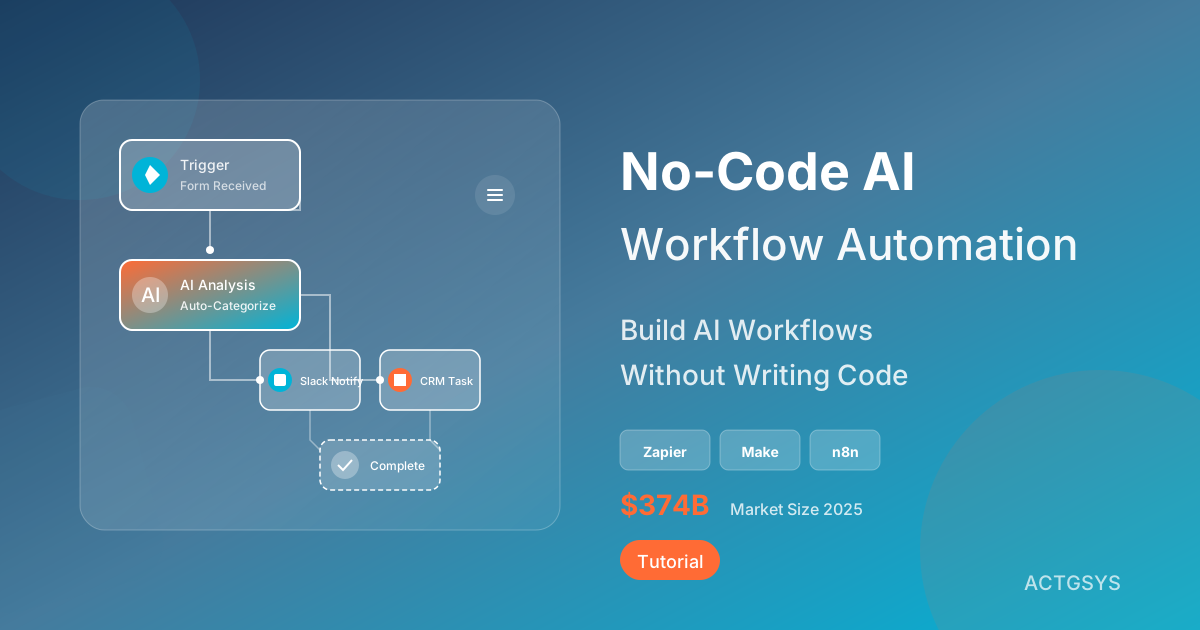
No-Code AI Workflow Automation: How SMEs Can Implement AI Without Developers
Explore the hottest No-Code AI automation tools of 2025, including Zapier AI, Make, and n8n. Learn how to build AI workflows using natural language, enabling non-technical staff to achieve enterprise automation with 80% efficiency gains.
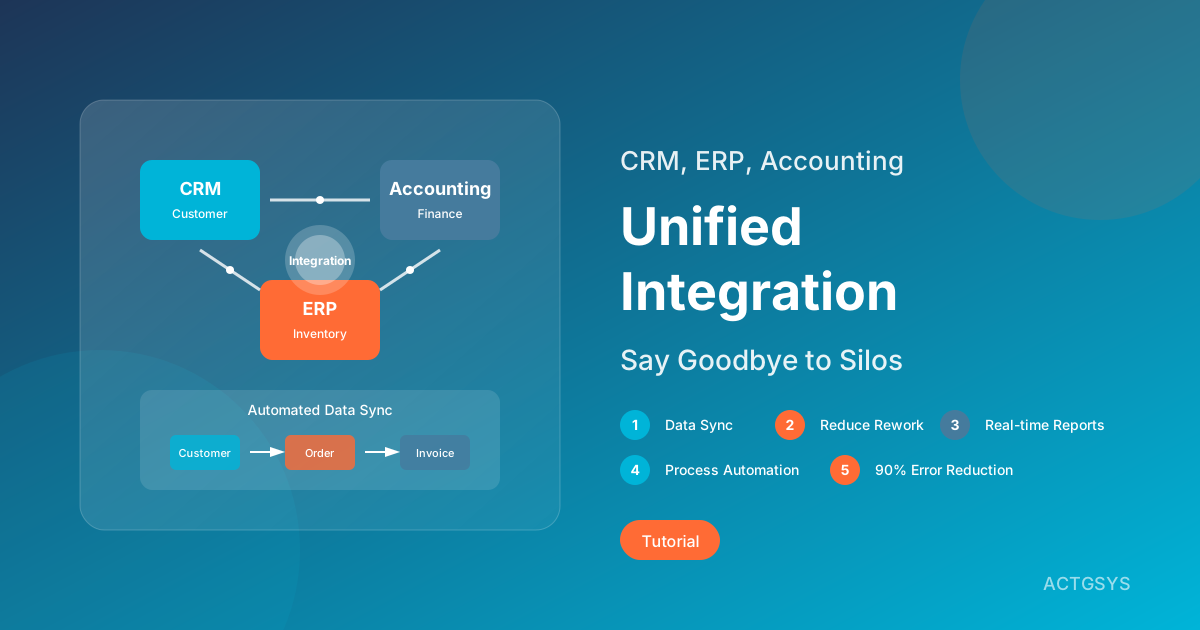
How to Integrate CRM, ERP, and Accounting Systems: Complete SME Integration Guide
In-depth analysis of integration strategies for CRM, ERP, and accounting systems. Understand the pain points of information silos, compare integration methods (API, middleware, native integration), and learn how to achieve data synchronization and process automation.