What is MCP? How Enterprises Can Leverage AI Agents to Boost Operational Efficiency
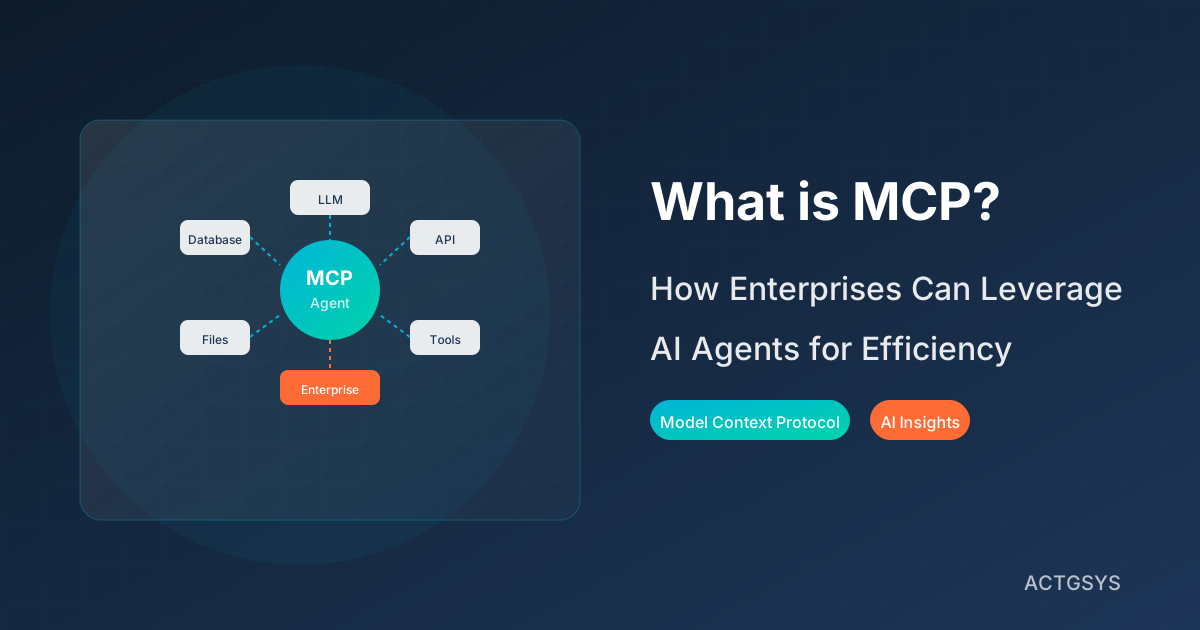
With the rapid development of AI technology, enterprises are increasingly focused on how to effectively integrate AI capabilities into their existing business systems. Model Context Protocol (MCP), as an emerging open standard, is changing how enterprises deploy AI Agents.
What is MCP?
Model Context Protocol (MCP) is an open protocol introduced by Anthropic, designed to standardize interactions between AI models and external data sources and tools. Simply put, it's like a "USB interface" for the AI world, allowing different systems to communicate with AI in a unified way.
Core Features of MCP
- Standardized Connections: Unified protocol specifications reduce integration complexity
- Two-way Communication: AI can not only read data but also execute operations
- Security Controls: Built-in permission management and access control mechanisms
- Extensible Architecture: Supports integration with multiple data sources and tools
Enterprise Application Scenarios for AI Agents
Scenario 1: Intelligent Customer Service Assistant
Through MCP, AI Agents can access customer databases, order systems, and knowledge bases in real-time to provide accurate customer service:
- Query customer order history
- Track shipment status
- Process return requests
- Answer product technical questions
Scenario 2: Financial Automation
AI Agents connected to accounting systems can perform:
- Automated reconciliation and anomaly flagging
- Invoice recognition and data extraction
- Expense report review
- Financial statement generation
Scenario 3: Supply Chain Management
AI Agents integrated with ERP and supplier systems can:
- Monitor inventory levels and auto-replenish
- Analyze supplier quotes
- Predict demand changes
- Optimize procurement timing
Scenario 4: Sales Support
AI Agents connected to CRM systems can:
- Automatically update customer interaction records
- Generate customer insight reports
- Recommend next-step action plans
- Predict deal closure probability
MCP Architecture Explained
Basic Components
┌─────────────┐     ┌─────────────┐     ┌─────────────┐
│  AI Model   │◄───►│ MCP Protocol│◄───►│External Sys │
└─────────────┘     └─────────────┘     └─────────────┘
                          │
                    ┌─────┴─────┐
                    │           │
               ┌────▼────┐ ┌────▼────┐
               │Data Src │ │  Tools  │
               └─────────┘ └─────────┘
Operational Flow
- Request Initiation: AI model initiates request through MCP protocol based on user needs
- Permission Verification: MCP Server validates request legitimacy and permissions
- Data Access: Retrieves required data or executes specified operations
- Result Return: Returns results in standard format to AI model
- Intelligent Processing: AI model processes information and generates response
Steps for Enterprise MCP Implementation
Step 1: Inventory Existing Systems
- List all systems needing integration (CRM, ERP, databases, etc.)
- Assess API support level for each system
- Identify data sensitivity and security requirements
Step 2: Design Architecture
- Define MCP Server deployment location
- Plan permission control strategy
- Design data flow and security boundaries
Step 3: Develop Connectors
- Build MCP connectors for each system
- Implement data transformation and format standardization
- Establish error handling mechanisms
Step 4: Test and Validate
- Conduct security penetration testing
- Verify functional correctness
- Test performance and scalability
Step 5: Go-Live
- Phased deployment
- Establish monitoring dashboards
- Train relevant personnel
Security Considerations
Access Control
- Principle of Least Privilege: AI Agent only accesses necessary data
- Role Separation: Different user roles have different AI function permissions
- Operation Auditing: Log all AI-executed operations
Data Protection
- Transport Encryption: All communications use TLS encryption
- Sensitive Data Masking: Process PII and other sensitive information
- Data Retention Policy: Clearly define data retention periods
Success Case Study
Case: Manufacturing Procurement Automation
An electronics component manufacturer built an AI procurement assistant through MCP integration:
Challenges Before Implementation:
- Procurement staff spent 3 hours daily on price comparison
- Error rate approximately 5%
- Chaotic supplier management
Results After Implementation:
- Price comparison time reduced to 15 minutes
- Error rate dropped to 0.5%
- Supplier performance visible at a glance
- Annual procurement costs reduced by 12%
Conclusion
The emergence of MCP protocol provides standardized infrastructure for enterprise AI Agent deployment. Through proper architecture design and implementation strategy, enterprises can rapidly build powerful AI capabilities and achieve comprehensive operational efficiency improvements.
ACTGSYS has extensive AI Agent development experience and can help enterprises plan and implement MCP-based AI solutions. If you're interested in enterprise AI Agents, please contact us.
Related Articles
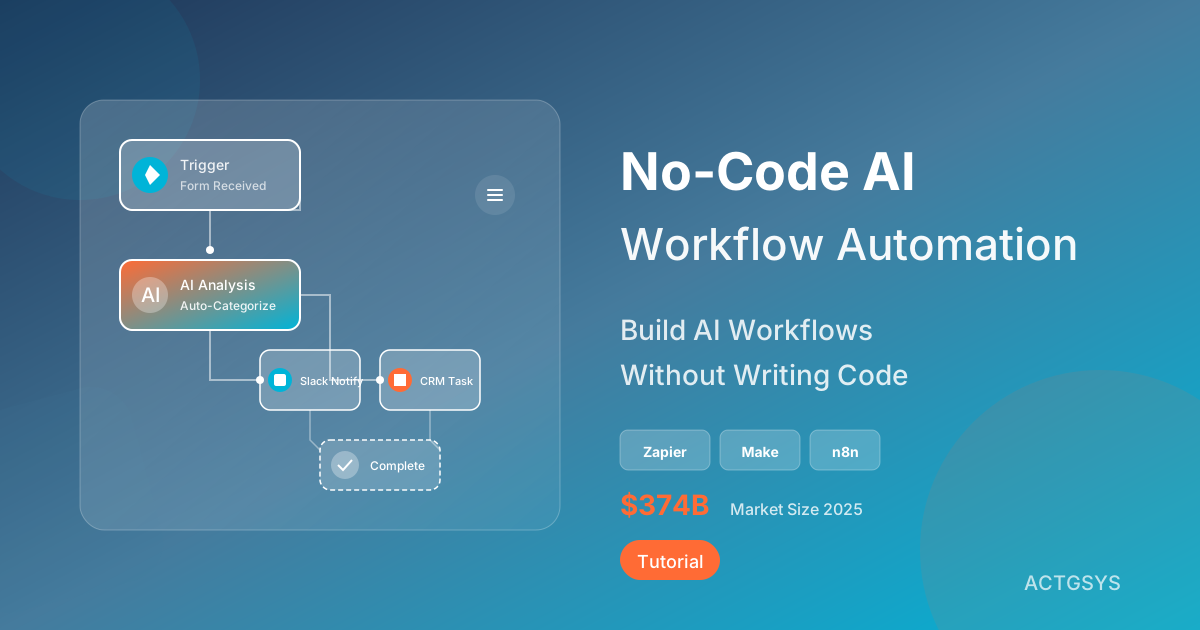
No-Code AI Workflow Automation: How SMEs Can Implement AI Without Developers
Explore the hottest No-Code AI automation tools of 2025, including Zapier AI, Make, and n8n. Learn how to build AI workflows using natural language, enabling non-technical staff to achieve enterprise automation with 80% efficiency gains.
No-Code/Low-Code Platforms 2026: The Complete SME Automation Guide
Comprehensive analysis of 2026 No-Code/Low-Code market trends, covering Citizen Developers, AI-assisted development, and platform selection to help SMEs achieve rapid business automation.
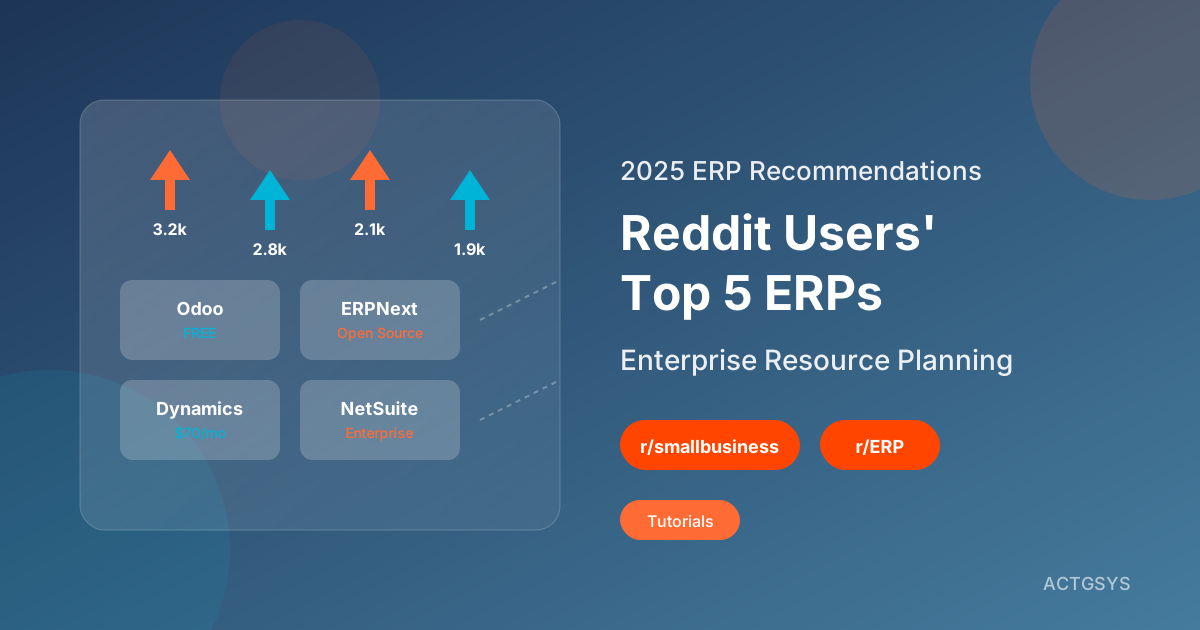
2025 ERP Software Recommendations: Reddit Users' Top 5 Enterprise Resource Planning Systems
Curated from Reddit r/smallbusiness and r/ERP community discussions, comparing Odoo, ERPNext, NetSuite and other ERP systems' pros and cons. Learn from real user reviews to find the best inventory and business management solution for SMEs.